Winter does not ask permission before it turns your roof into a frozen delta. One long cold snap with sunny afternoons, and meltwater begins to refreeze at the eaves. The result is a ridge of ice that traps water behind it and forces that water into places it does not belong. I have walked into homes where ceiling paint was peeling like a bad sunburn and roof snow removal hardwood floors had cupped along seams. In every case, the story began on the roof.
Homeowners usually search for ice dam removal when the dripping has already started. By then, time matters, and price questions come fast. The honest answer is that ice dam removal cost depends on a bundle of variables: the method used, the size and complexity of the roof, the weather on the day of service, how accessible the eaves are, and whether the job is routine or an emergency. If you know how those variables play together, you can predict and control your costs without gambling with your home.
What an ice dam is actually doing to your house
An ice dam forms when roof snow melts higher up and refreezes at the cold edge of the roof. The ice creates a dam that traps liquid water. Shingles are water shedding, not waterproof. Trapped water finds nail holes and laps, migrates under shingles, soaks the underlayment, then moves to sheathing and into the cavity. It stains ceilings, wets insulation, and can saturate wall assemblies. On older homes with plank sheathing and minimal air sealing, I have seen frost inside the attic turn to a steady drip once daytime temperatures tick up.
This is why the speed and method of roof ice dam removal matter. A slow or aggressive approach can both be expensive, just in different ways. A cautious pro can save thousands in hidden damage by preventing more water intrusion while clearing the ice.
The main methods and how they influence price
Most professional ice dam removal falls into two categories: steam ice dam removal, and mechanical removal using chisels or hammers. Some companies also offer heated cables for prevention, and a few still use hot pressure washers, which I do not recommend.
Steam ice dam removal is the gold standard. A dedicated steamer produces low pressure, high temperature vapor that cuts channels through ice without blasting granules off shingles. The equipment is expensive, the setup takes time, and the operators need training. Expect higher hourly rates for steam, but fewer surprises and less roof damage.
Mechanical removal can be faster in the hands of a careful technician on a straightforward roof, but it carries risk. I have seen punctured shingles, damaged flashings, and broken gutters from hasty work. If a contractor quotes a bargain rate then sends workers with claw hammers and no steam, your immediate savings can turn into a leak when the next thaw hits.
Hot pressure washing sounds plausible until you stand below and see what 2,500 psi does to a shingle. It strips protective granules and forces water where it should not go. If a provider proposes pressure washing, find another provider.
For most homeowners, professional ice dam removal using a steamer costs more per hour and less per claim with the insurance company later. The right choice depends on your tolerance for risk and the value of your roofing system.
Typical price ranges you will see
Rates vary by region and demand, but several patterns hold steady across the northern states and Canadian provinces.
Hourly rates. For steam ice dam removal, $300 to $500 per hour is common for a two person crew, including the steamer and safety gear. Some metro areas jump to $600 during deep cold snaps when demand spikes. A mechanical removal crew might quote $200 to $350 per hour, sometimes with a minimum.
Minimum charges. Most companies have a two to three hour minimum to cover travel, setup, and gear. That means a small job can still cost $600 to $1,500 even if the ice clears in ninety minutes. If the provider is driving across town in a blizzard, the minimum keeps the truck fueled and workers paid.
Per foot or per section quotes. A few firms quote by the linear foot of eave or per roof section. The numbers sound neat, but it is easy to overpay if your roofline is simple and underpay if it is complex, which tends to bring hidden add‑ons. Ask how they count feet and what is included.
Emergency premiums. Nights, weekends, and active leaking usually add 20 to 50 percent. If a ceiling is already dripping, paying the premium can be cheaper than a water remediation bill.
For a typical residential ice dam removal job on a one‑and‑a‑half story home with a straightforward eave line, expect $900 to $1,800. Large, complex roofs with valleys and multiple dormers can run $2,000 to $4,000. I have seen numbers above $5,000 on steep, tall houses during peak demand with limited access and heavy buildup.
What actually takes the time
If you watch a crew work, the clock does not start when they first touch the ice. It starts with access and safety. Ladders get tied off, roof anchors installed, ropes rigged. On steep or tall structures, that prep can take as long as the removal itself. Insurance companies and workers’ comp auditors care about this, and so should you. A safe crew moves faster once they start because they are not improvising around hazards.
Once on the roof, the time sink is often not the outer rim of the ice dam, but the pockets of refrozen meltwater backed up under the snowpack. A technician will cut channels through the ice to let water drain, then pull snow off a few feet above the eave. If there is an upper roof dumping onto a lower roof, they may need to clear both. Valleys pack ice faster and hold it longer, so they take patience. If gutters are frozen solid, expect extra minutes to open downspouts and give meltwater somewhere to go.
Wind, sunlight, and ambient temperature also play roles. On a sunny 25 degree day, the surface softens and steam moves quickly. At 5 below with wind, ice behaves like glass. Steam still works, but operators must slow down to avoid pushing meltwater where it can refreeze in dangerous plates.
Roof design features that drive cost
Certain architectural choices, beautiful as they are, complicate ice dam removal. A gambrel with eyebrow dormers and a cathedral ceiling has weak points along each transition. Deep overhangs shade eaves, keeping them colder and more prone to ice buildup. Skylights surrounded by snow create warm wells that feed dams on every side. Copper valleys conduct heat and then shed it quickly, which can create sawtooth ridges of ice that resist cleanup.
Pitch matters too. A 4/12 roof is walkable under the right conditions. A 10/12 roof demands anchors and ropes and careful foot placement. Higher pitch equals more setup time and more slow movement, and that adds to labor costs. Multi‑story homes add ladder moves and anchor placements, not to mention the time to haul a heavy steamer hose to different elevations.
Gutter style matters. Standard K‑style gutters can trap ice, but they are predictable. Half‑round gutters with decorative hangers can be fragile under load. Leaf guards complicate things. Some guards freeze into the ice and must be freed without bending. That takes hands and minutes.
Access, or why your shrubs and driveway matter
I once watched a crew spend thirty minutes snow‑blowing a path because the steamer and hoses could not get around a drifted fence line. They did it cheerfully and billed at their regular rate, but the homeowner paid for a half hour of snow removal just to put boots at the eaves. If you want to keep costs down, clear a path for equipment. Provide an outdoor outlet if needed and a hose bib if the crew uses one. Move cars away from the eave line. Place tarps or bins where crews can collect ice chunks so they do not smash landscaping.
Access also includes ladder footing. Frozen gravel is unstable, decks can be slick, and packed snow hides edges. A solid, clear surface lets the crew get up and down faster and safer. If a company has to set up scaffolding to reach a particular section safely, the bill reflects that.
Why steam often wins despite the rate
People notice the hourly rate first. The smarter question is what the method protects. A steamer works like a hot knife through butter, but at a pressure that will not strip a shingle. It allows precise cuts and controlled channels, and it minimizes the risk of forcing water under the shingles. On historic homes with fragile slate or cedar, steam may be the only responsible approach. I have seen crews use steam to free ice from copper gutters without warping them, a task that goes sideways fast with a hammer.
Even with an experienced team, mechanical chipping can leave micro‑fractures in asphalt, pull seals on tabbed shingles, and dent soft metal flashings. Any of those can become leak points when the thaw and freeze cycle continues. If you are paying for professional ice dam removal to stop a leak, it is worth using a method that does not create tomorrow’s leak.
When emergency service is worth the premium
Every season brings calls at midnight. A bedroom ceiling starts dripping, and a homeowner wants a crew now. Emergency ice dam removal exists for a reason. Water migration does not wait for business hours, and some homes have finished attics or sensitive areas beneath eaves that cannot absorb a day of dripping.
If the ceiling is actively wet, a fast steam channel sliced in the right spot can relieve the dam and let water drain outside within minutes. I have seen a $400 emergency premium save a $6,000 drywall and painting job. On the other hand, if your ceiling stain is old and there is no active dripping, schedule a daytime visit. You will save money and likely get a less rushed job.
Regional and seasonal dynamics
Where you live changes the math. In northern New England, the Upper Midwest, and the Rockies, ice dam removal services are an established niche. Crews own proper steamers, and pricing stabilizes because competition is real. Expect those $300 to $500 per hour rates with defined minimums.
In regions that only get episodic storms, companies often rent steamers or reassign crews from other trades. Rates can spike because equipment is scarce and the learning curve is steep. If your area has a one‑in‑five‑year ice dam season, call early and expect a longer wait. Ask what equipment they use and how many seasons they have run it.
Seasonality matters even within a single winter. After the first heavy storm, demand hits, then tapers, then surges again with the next thaw. Prices trend up during surges. If you know a roof is prone to ice dams and you see the weather lining up for a classic freeze‑thaw cycle, calling before the leak starts can save both time and money.
Insurance, liability, and the fine print that affects cost
Two questions determine the kind of service you get and how much it may cost in the long run. Does the company carry liability insurance and workers’ compensation, and do they use written scope and waivers that match the job? A reputable ice dam removal service will show proof without flinching. Insurance adds overhead, which shows up in the hourly rate, but it protects you if someone slips or if accidental damage occurs.
Also ask how they deal with pre‑existing conditions. If your roof has brittle shingles near end of life, a good contractor will note it and explain the limitations. They may slow down or refuse to chip in vulnerable areas and rely on steam and controlled drainage. That transparency helps set expectations and can head off disputes over minor shingle scuffing that was inevitable.
Finally, check whether your homeowners policy covers water damage from ice dams. Many do, with deductibles. Most do not cover the cost to remove the ice itself, only the damage. Knowing your coverage helps you decide how quickly to act and how to balance emergency premiums against potential remediation costs.
How to estimate your job before you call
You will never get a perfect number over the phone, but you can give a provider enough detail to land in the right range. Stand outside and look with a benefits of professional ice dam removal camera. Measure the length of eaves with obvious ice. Note roof pitch roughly: shallow, moderate, or steep. Count dormers and valleys where snow piles. Describe whether gutters are present and whether they are iced over. Share roof height and how clear the ground is for ladders. Mention interior symptoms, especially active drips.
With that information, a seasoned scheduler can tell you whether it sounds like a two to three hour job or a half day. If the company hesitates to give any bracket, keep calling. Good providers do not promise exact numbers sight unseen, but they will share typical outcomes for similar homes.
Prevent ice dams on roof for less than removal costs
Paying for residential ice dam removal is the symptom fix. The cure is control of heat loss and ventilation. I have seen homes cut their ice dam problem by 80 percent after a weekend of air sealing the attic floor and adding insulation.
Air sealing. Warm air escapes through can lights, bath fans, top plates, and attic hatches. Seal those penetrations with foam and gaskets. It is unglamorous but effective.
Insulation. Bring attic insulation to at least R‑49 in cold climates if the framing allows. Dense pack slopes where practical. Keep baffles clear so soffit air flows.
Ventilation. A balanced system with clear soffits and a continuous ridge vent stops warm air from stagnating against the underside of the roof deck. Do not mix ridge vents with gable fans that can short‑circuit the flow.
Heat cables. As a last resort, heat cables can open drainage paths. They are not a substitute for insulation and air sealing, and they cost money to run. If you install them, use a thermostat or sensor to cut operating costs and have a licensed electrician handle the circuit.
Roof design fixes. On problem areas like low slope sections under upper roofs, consider ice and water shield upgrades when you next re‑roof, extended drip edges, or modest overhang changes. These are longer horizon changes, but they pay off.
What to ask when you search “ice dam removal near me”
Choosing the right professional matters more than shaving twenty dollars off the hourly rate. You want a team that shows up prepared and leaves without creating new problems.
- What method do you use for ice dam removal, and do you own your steam equipment? Ask for a photo of the steamer if you are unsure. How many seasons have you done professional ice dam removal on homes like mine? Experience on steep, older roofs matters. What is your hourly rate, minimum charge, and emergency premium? Ask what typical jobs on similar houses have cost recently. How do you protect shingles, gutters, and landscaping? Look for mention of roof anchors, padded ladder legs, and ice chunk management. Are you insured for this specific work, and can you send proof? A reliable company will provide certificates quickly.
Keep the list short when you call. If the office answers clearly and confidently, you have already learned something about how they operate.
A few case studies from the field
A two story colonial in Minneapolis with 80 feet of eave on the north side, standard K‑style gutters, and a moderate 6/12 pitch. Ice measured 6 to 8 inches thick at the drip line with a one inch lip. Steam crew of two, three hours onsite including setup, $1,350. The crew cut relief channels every six feet, pulled the first four feet of snow, and cleared gutter inlets. The homeowner had stained drywall at one corner. No active dripping at arrival. Scheduling during daylight saved the emergency premium.
A 1920s craftsman in Portland, Maine with exposed rafter tails and half‑round copper gutters. Multiple dormers and a low slope porch roof under an upper roof valley. Heavy ice from valley dumped onto the porch, and water had started to drip into the entryway. Steam only. Four hours, $1,900. Extra time to protect the copper, bag and lower large ice chunks to avoid breaking the porch. The team returned the next day by agreement to clear the upper valley after additional snowfall.
A chalet in Colorado with a steep 12/12 metal roof and no gutters. Ice formed where snow slid and piled behind a chimney cricket. Emergency call on a Saturday with water coming through the tongue‑and‑groove ceiling. Steam used to open a trench around the cricket and down the eave. Two hours of removal plus an hour of setup due to height and anchors, $1,650 with emergency premium. The homeowner scheduled an insulation contractor the following week to address gaps around the chimney chase.
These jobs shared a pattern. Good access and preparation cut time. Roof complexity and active leaks increased it. Steam solved problems without adding to them.
What to avoid, even if it seems cheaper
Rock salt and calcium chloride on shingles. Chlorides corrode metal, stain siding, and damage vegetation. They also do not solve the underlying roof problem. If you must use ice melt, place it in nylon socks and keep it targeted, but treat it as a temporary measure.
Chopping ice with a roof shovel or ax. You can easily puncture shingles and snap tabs. If you must do something before a pro arrives, pull snow back from the eave with a roof rake from the ground, staying off ladders. Do not stand below falling snow or ice.
Heat guns and torches. A roof deck is wood. Enough said. Torches also produce uneven heating, which can push water into the assembly.
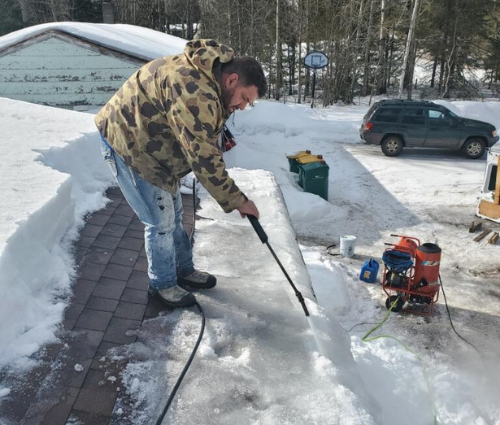
High pressure washers. They remove granules and force water uphill. Even if someone you know swears it worked for them, it is not a repeatable, safe method.
How to keep a lid on the bill the day of service
Small choices add up. Clear snow around the house so the crew can move freely. Have an exterior outlet accessible if the steamer requires it, or confirm the company brings a generator. Walk the perimeter with the tech and point out where interior leaks have appeared. Knowing where water is entering helps them prioritize relief cuts that stop the immediate problem first.
Agree on a stop point. For example, stop after the north eave is open and water is draining, then reassess before clearing decorative sections that are not causing leaks. Most crews appreciate a clear scope.
If you are out of town or cannot be there, ask for progress photos. Good providers already take them for their records. The photos help you understand what was done and why additional time may be needed.
The long view: budgeting for winter
If your house gets ice dams every year, treat it like a seasonal budget item, not a surprise. Set aside an amount based on your past experiences, and spend some of it before the first storm on prevention. A few hundred dollars of air sealing and baffle work reduces your reliance on emergency calls.
If you are replacing the roof within the next few years, talk to your roofer about extending ice and water shield well past the code minimum in problem areas. On a north eave under a valley, I will spec the membrane from the drip edge to at least six feet up the roof, sometimes more, depending on the history of the house. It is cheaper at re‑roof than as a retrofit.
Bringing it together
Ice dam removal cost is not a mystery if you break down the elements: the method, the crew’s experience, the roof itself, the weather, and the urgency. Steam ice dam removal tends to cost more per hour but saves roofs and headaches. Mechanical methods can work on simple cases but carry risk. Access and safety prep are part of the job, not an upsell. Choose a provider who treats both your home and their workers with respect, and ask the few questions that reveal how they operate.
Most important, use the crisis as a prompt to prevent the next one. Tidy insulation numbers on paper do not matter if warm air leaks through light cans and bath fans. Seal the holes, vent the attic correctly, and manage snow when storms stack up. Spend a little on prevention, and you will spend far less on the next emergency. When you do need help, search for ice dam removal near me, ask about steam, and buy the right fix the first time.